
Hurricane Preparedness for Gainesville Seniors and Caregivers
With both coasts a long drive away, many people in Alachua County feel a step removed from hurricanes. Recent storms have shown otherwise. When Hurricane Milton crossed Florida in October 2024, Alachua County opened general shelters and a special needs shelter. Good hurricane preparedness for seniors in Gainesville is less about storm surge and more about power outages, heat, blocked roads and medications. This guide covers the local steps that matter most.
Why Inland Storms Still Put Gainesville Seniors at Risk
Hurricane season runs from June 1 through November 30. In Gainesville, the biggest threats from a passing storm are wind, falling trees across our heavily wooded neighborhoods, and power outages that can last days. For a senior who relies on an oxygen concentrator, a powered lift chair, refrigerated insulin or air conditioning to stay safe in the heat, a long outage quickly becomes a medical problem.
Storms also disrupt routines. Pharmacies close early, home health visits get canceled, and family members may be stuck dealing with their own homes. The families who handle storms most calmly are usually the ones who settled on a plan back in June. If your parent recently came home from the hospital, our hospital discharge checklist explains the medication folder worth tucking into any go-bag.
Register for Alachua County's Special Needs Program
Alachua County Emergency Management runs the Special Needs Program, often called the Special Needs Registry. The county says it serves residents who have mental or physical limitations or disabilities and have no other option but to request public assistance for evacuation planning. Registration is free, voluntary and confidential.
- Register online through the county's Special Needs Online Registration Form, or download the paper form, which is also available in Spanish.
- Call Alachua County Emergency Management at 352-264-6500 to update an existing registration or if you cannot use the online form.
- Register before hurricane season when you can, so planners know who may need help. New registrations are accepted any time.
- If your parent's needs, address or phone number change, update the registration.
The county describes the program as being for residents with no other way to shelter safely. If your parent can stay with family in a sturdier home or go to a hotel outside the storm's path, that is usually more comfortable than a public shelter. Register anyway if there is a real chance you will need help.
The Gainesville Special Needs Shelter: What to Know
During Hurricane Milton in October 2024, Alachua County used the Alachua County Senior Recreation Center at 5701 NW 34th Boulevard as its special needs shelter. Shelter locations can change from storm to storm, so always confirm through county announcements. In 2024 the county offered transportation help to the special needs shelter by phone at 352-955-2575.
The county's Milton updates asked people going to the special needs shelter to bring their own bedding, prescription medications, special dietary foods, spare clothing, personal care items and identification. The shelter provided one cot per patient and said it could not guarantee cots for caregivers. The Florida Department of Health recommends bringing at least 72 hours of prescription medications, along with devices such as oxygen equipment, CPAP machines or glucose monitors, and notes that family members or aides can assist.
Sign Up for Alachua County Emergency Alerts
Alachua County Emergency Management offers several ways to stay informed. Text ALACHUA to 888-777 for real-time county updates during a large-scale emergency. Sign up for AlertAlachua to receive messages by phone, email or text about severe weather, road closures, missing persons and evacuations. During a major incident, the county posts updates at AlachuaCountyReady.com.
Set these up on your phone and on your parent's phone. If your parent does not text, make sure at least two family members are signed up and agree on who will call to pass along updates.
Build a Senior-Ready Hurricane Supply Kit
| Category | What to pack |
|---|---|
| Medications | At least 72 hours of prescriptions in original labeled bottles, a written medication list and the pharmacy's phone number |
| Medical equipment | Oxygen supplies or a supplier plan, CPAP, glucose monitor, hearing aid batteries, spare glasses |
| Water and food | One gallon of water per person per day, plus food that fits any special diet |
| Power | Flashlights, batteries, a charged phone and a backup battery pack |
| Documents | ID, insurance and Medicare cards, advance directives, a list of doctors and emergency contacts |
| Comfort and hygiene | Incontinence supplies, wipes, a change of clothes, a pillow and a familiar blanket |
Florida made many hurricane kit items permanently exempt from state sales tax starting August 1, 2025, including portable generators, batteries in common sizes, smoke and carbon monoxide alarms, and waterproof tarps, according to public radio coverage of the new law. If you run a generator, keep it outdoors and away from windows and doors.
Heat, Power Outages and Medical Equipment
After a storm passes, the hardest days are often the hot, humid ones that follow while crews restore power. Older adults feel heat more and notice thirst less, and some medications make it harder for the body to cool down. Without air conditioning, a closed-up house in Gainesville can become dangerous within a day or two.
- Know who supplies your parent's electricity. Gainesville Regional Utilities serves much of the city, and other parts of the county are served by different utilities. Save the outage reporting number in your phone.
- Ask the oxygen or equipment supplier what happens in a long outage, and keep backup tanks or batteries charged during storm season.
- Keep insulin and other refrigerated medications in a cooler with ice packs, and ask the pharmacist how long each can safely stay out of the refrigerator.
- Plan a cool place to go, such as a relative's house with power or a generator, if the outage lasts more than a day.
- Check on your parent at least twice a day during an outage, in person if roads allow.
If your parent lives alone, make sure a neighbor knows how to reach you. In many Gainesville neighborhoods, the people next door are the first to notice when someone has not come outside. Families in the more rural parts of the county, around Micanopy or Hawthorne, may live farther from neighbors, so a set check-in schedule matters even more.
Make a Family Storm Plan
- 1Decide where your parent will ride out a storm.Home, a relative's house, a hotel or, as a last resort, a public shelter. Write it down.
- 2Assign one family lead.Choose who checks on your parent before, during and after the storm, and who backs them up.
- 3Plan for power.If your parent depends on electric medical equipment, talk to the equipment supplier and doctor now about backup options.
- 4Refill early.When a storm is forecast, refill prescriptions and stock up on supplies several days ahead.
- 5Plan the days after.Outages and debris can last a week. Arrange who will bring ice, meals and fresh water if roads are blocked.
How In-Home Caregivers Help Before and After a Storm
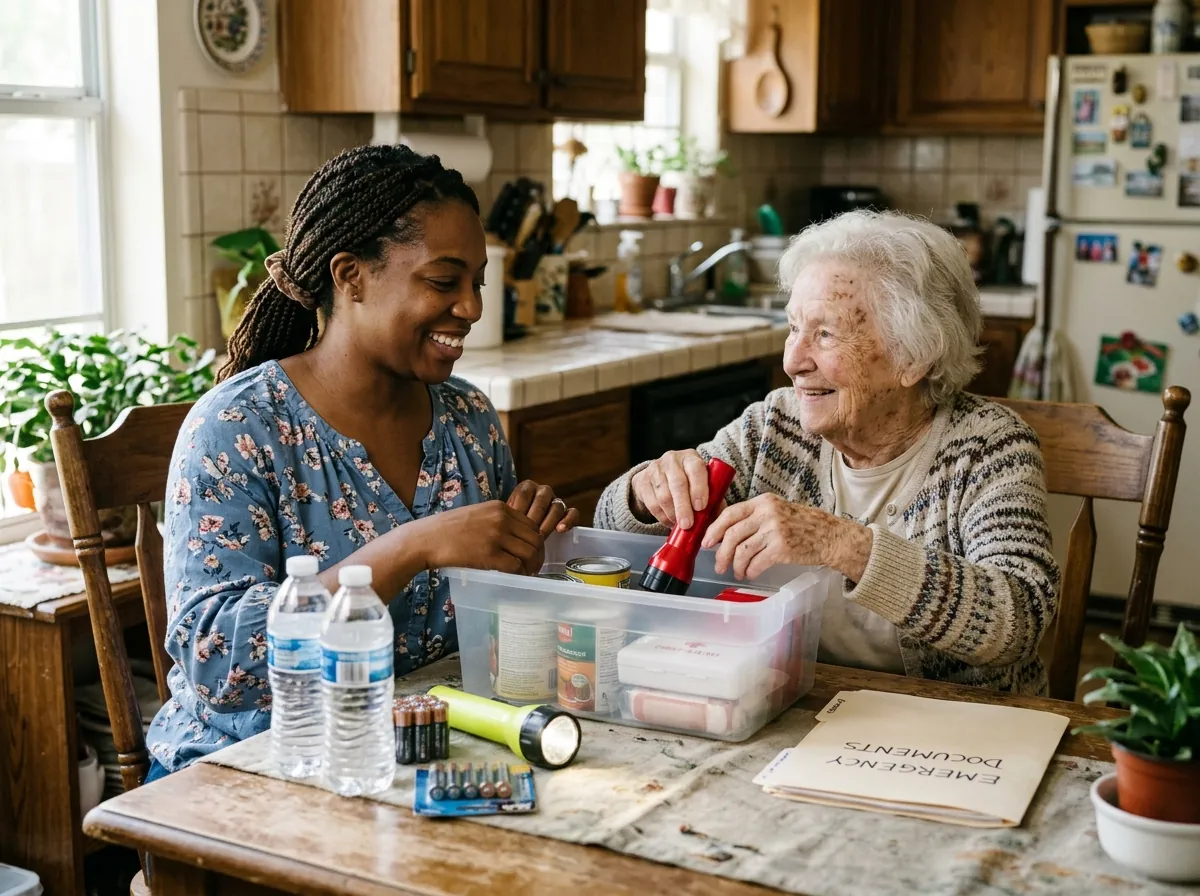
Our caregivers help clients get ready: packing go-bags, picking up prescriptions, securing patio furniture, charging devices and making sure the medication list is current. During a storm watch, Dana Brooks calls every family to confirm plans and schedules. After a storm, when roads are safe, caregivers check in, help clean out spoiled food, keep clients cool and hydrated, and tell families exactly how their parent is doing. Calls are answered day or night, seven days a week. Clients who already receive help with bathing and dressing keep that routine as close to normal as conditions allow, and a short respite visit can free a family caregiver to secure their own home before the wind picks up.
Once the season ends on November 30, take a few minutes to restock. Replace medications and batteries that were used, update the special needs registration if anything changed, and write down what worked and what did not. A short note after each storm, such as which relative's house had power or which pharmacy stayed open, makes next year's plan faster and calmer.
If a parent will ride out a storm at home or at a relative's house, 24-hour or live-in care can keep someone with them through the worst of it. To plan ahead for this season, call (352) 352-9346. For more ways to keep a parent safe at home, read signs it's time to bring in help, or browse our common questions about care.
Common questions
How do I register for the Alachua County special needs shelter?
Register through Alachua County Emergency Management's Special Needs Program, online or with the paper form. Call 352-264-6500 to update a registration or if you cannot use the online form.
Where is the special needs shelter in Gainesville?
During Hurricane Milton in 2024, the county used the Alachua County Senior Recreation Center at 5701 NW 34th Boulevard. Locations can change, so confirm through county alerts before you go.
Can a caregiver stay with my parent at the special needs shelter?
Family members and aides can assist, and many shelters expect it. During Milton, Alachua County said it provided one cot per patient and could not guarantee cots for caregivers, so caregivers should bring their own bedding.
How do I get emergency alerts in Alachua County?
Text ALACHUA to 888-777 for county updates, sign up for AlertAlachua, and check AlachuaCountyReady.com during major incidents.
How many days of medication should a senior have for a hurricane?
The Florida Department of Health recommends at least 72 hours of prescription medications for a special needs shelter. Refilling early when a storm is forecast gives more cushion.
Can Gainesville Home Care help during hurricane season?
Yes. Caregivers help clients prepare, and we confirm every family's plan before a storm. Care is available up to 24 hours a day, including live-in care.
Dana can talk it through with you, no pressure.
Keep reading
 Planning careSigns It's Time to Bring In Help at Home
 Hospital to homeHospital Discharge Checklist for Gainesville Families
 Planning careHow to Choose a Home Care Agency in Gainesville
- Alachua County Emergency Management: Special Needs Program
- Alachua County Emergency Management (AlertAlachua, text ALACHUA to 888-777)
- Alachua County: Hurricane Milton Update 6, general population and special needs shelters open (Oct. 8, 2024)
- AlachuaCountyReady.com
- Florida Department of Health: Special needs shelters
- WLRN: Hurricane kit items permanently sales tax free starting Aug. 1, 2025
- Ready.gov: Older adults
- Gainesville Regional Utilities (GRU)